Room to fail
Last weekend I was in London with my daughter for a lovely couple of days and a Bon Jovi concert. We were sitting together in a Costa Coffee when a young couple sat down across us. At first I did not really notice them, only that there were these odd little sounds that kept repeating. Then it clicked, when they stood up and started filming their TikTok dance, the sound turned up loud, with eyes only for the phone that had been carefully positioned for the perfect shot.
I have been turning that small moment over in my head ever since, and not because I want to complain about young people. I am genuinely curious about what it says, because I think it points at something bigger than one couple in a coffee shop.
A mentality worth looking at
What struck me was not the dance itself, but the complete absence of the room around them. It is the same thing I notice more often lately. The phone always in hand, the video call on speaker in a quiet carriage, a way of moving through the world that is very focused on the self and has little eye for the people nearby. Alongside that I notice something else, which is a discomfort with criticism, and an assumption that things are basically fine as they are.
Let me be careful here, because it would be easy and lazy to turn this into "everything was better in my day". It was not, and every generation has heard that from the one before it. This generation grew up with tools and skills I can only admire, and plenty of them care deeply about their work and the world. So I am not looking to judge, I am trying to understand. And when I sit with it honestly, part of what I see is something we built for them, not something they invented.
When failure is quietly removed
We have slowly created a world where everything has to be positive. A poor result cannot be delivered too plainly, because the worry is that it will be too much to handle. Feedback gets softened until there is little left of it. Even in sport I see it, where the score is played down and there is no winner and no loser, because apparently the score should not matter.
I understand the good intention behind all of this, which is to protect people and to keep them motivated. But I do wonder what we give away when we take it too far. Because a score is not there to make someone feel small. A score, and the honest possibility of losing, is what gives an effort its meaning and gives us a reason to get better. If nothing can be lost, it becomes hard to say that anything has really been won. And if everything is already good enough, why would anyone reach for something more?
My concern, and I put it no stronger than that, is that this quietly nudges us all towards the middle. Towards results that are fine, that work, that pass. And away from the kind of work that is actually special.
Why this touches our craft
I care about this because our profession lives on the opposite instinct. Good software is built on fundamentals, on the willingness to hear that something is not right yet, and on rewriting a piece until it truly holds instead of settling for "it works". Quality comes from being able to fail, to take feedback seriously, and to keep refining long after the thing runs.
Honest feedback, even when it stings a little, is one of the most respectful gifts a colleague can give you. It says they took your work seriously enough to look closely. If we lose the ability to give and receive that, we do not become kinder, we just get quietly worse together. This is close to something I wrote about before, in The solo only a human can play, where the part that makes work meaningful is exactly the human care to get it right rather than merely done.
Something happened recently that made this very concrete for me. I had done a code review on a colleague’s work. Within moments the whole review had been dropped straight into an AI, and the suggested changes came back to me almost at once, ready for another round. Part of me thought that maybe this is simply the new way of working, and I have no wish to be the person who waves away a useful tool. But another part of me wondered what quietly went missing in those few seconds. The pause to sit with the feedback, to understand why the remark was made, and to let it change how you think next time. If the review goes in one side and the fix comes out the other without anyone really learning from it, we may end up shipping something that passes while slowly losing the ability to reason about it ourselves. I use AI every day and I believe in its value, so this is not a complaint about the tool. It is an honest question about where the thinking, and the learning, still take place.
Failing on the way to good
There is a reason I keep coming back to Michael Jordan when I write about our work. He put it better than I can: "I have missed more than nine thousand shots in my career. I have lost almost three hundred games. I have failed over and over and over again in my life. And that is why I succeed."
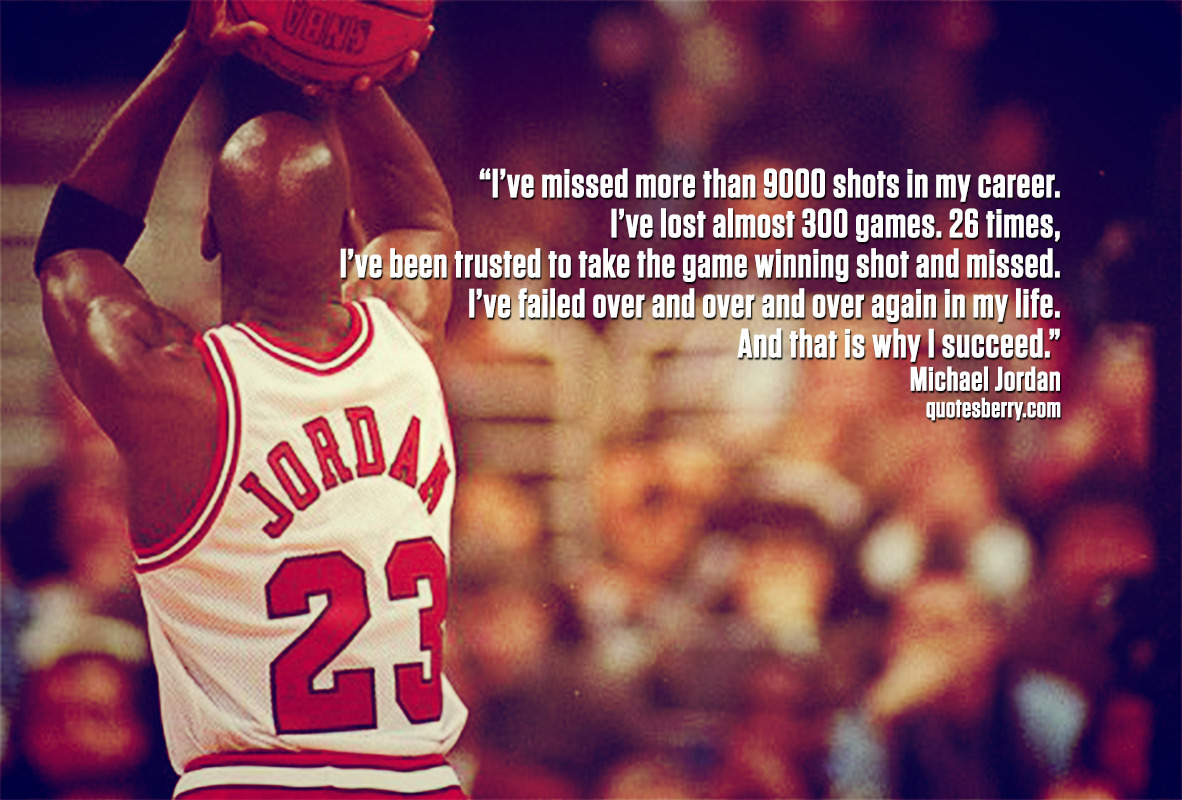
That is the mentality I would love to protect, in ourselves and in the people coming after us. Not failure for its own sake, but failure as the normal price of trying to be good at something. The score is not the enemy of growth, it is one of the things that makes growth possible.
So what can we do with that, without becoming the grumbling older colleague nobody wants to sit next to? For me it starts small and close to home. Give feedback that is kind and clear at the same time, and do not water it down to spare someone’s feelings when they can handle more than we assume. Let people experience a real result, including the disappointing kind, and then stand beside them while they make it better. Acknowledge good work when it is genuinely good, so that the word still means something. And keep some of your own attention for the room you are in, whether that is a team, a review, or a coffee shop.
I do not have this fully worked out, and I am wary of anyone who claims they do. But I keep landing in the same place. The score still matters, criticism is still a gift, and the special work still comes from people who are willing to fail on the way to getting it right. That is worth holding on to, and I would rather keep reaching for it than quietly settle for the middle.
