AI's Impact on Team Dynamics (Part 1) Isolation & Echo Chambers
This blog kicks off a three-part series based on my article “AI’s Impact on Team Dynamics,” originally published in a special edition of JavaPro magazine for JCON Europe 2026, titled Java in the Age of AI. You can find the full magazine here.
In this first part, I explore how AI is already reshaping the way we collaborate as teams and the less visible effects that come with it.
AI’s impact on Team Dynamics
After spending years advocating for strong team dynamics in software engineering, I have been fascinated as AI tools have entered our development workflows. In one of my previous blogs, I touched briefly on how AI might change team dynamics. Now, I want to dive deeper into this transformation, as what we’re experiencing isn’t just a new tool, it’s a fundamental shift in how we work together.
The question isn’t whether AI will impact team dynamics, it already has. The real question is: how do we maintain the human connections that make teams truly effective while embracing these new capabilities?
Spoiler alert: the answer isn’t about the technology itself, it’s about the choices we make in how we use it. AI can be an extremely powerful tool, and I’m a strong supporter of its use. There are hidden dangers though. Using AI irresponsibly can result in social isolation as I will explain in this blog, but we can avoid that by using it consciously and intentionally.
The isolation paradox
Here’s something I’ve noticed: AI assistants are incredibly helpful, but they’re also incredibly solitary. When a developer gets stuck on a problem, they now have a choice. Walk over to a colleague’s desk (or ping them on Slack/Teams) and discuss the issue, or ask an AI assistant for a solution.
The AI option is tempting. It’s instant. It doesn’t judge. It won’t roll its eyes at what might seem like a basic question. And it’s always available, even at 2 AM when you’re debugging that critical production issue.
But here’s the paradox: every time we choose AI over human interaction, we lose something valuable. We lose the spontaneous conversations that lead to unexpected insights. We lose the knowledge sharing that happens naturally when explaining a problem to someone else. We lose the social bonds that make teams resilient during challenging times.
I’ve seen developers who used to be highly collaborative become increasingly isolated. They’re productive, sure. Their code gets written. But they’re operating in a bubble, reinforced by an AI that reflects their own thinking patterns back at them.
The echo chamber effect
When you collaborate with humans, you get challenged. Your assumptions get questioned. Someone points out the edge case you missed or the security vulnerability you overlooked. This friction, while sometimes uncomfortable, is what makes software robust and developers evolve to the ‘next level’.
AI assistants, for all their capabilities, tend to be agreeable. They generate solutions based on patterns they’ve learned, but they don’t push back the way a senior developer would. Junior developers do this too through casual feedback that forces you to reconsider assumptions you didn’t know you were making.
I’ve reviewed code where developers clearly used AI assistance, and while the code works, it often lacks the thoughtfulness that comes from human discussion. It solves the immediate problem but misses the bigger picture. The architectural considerations and more important the lessons learned from past mistakes.
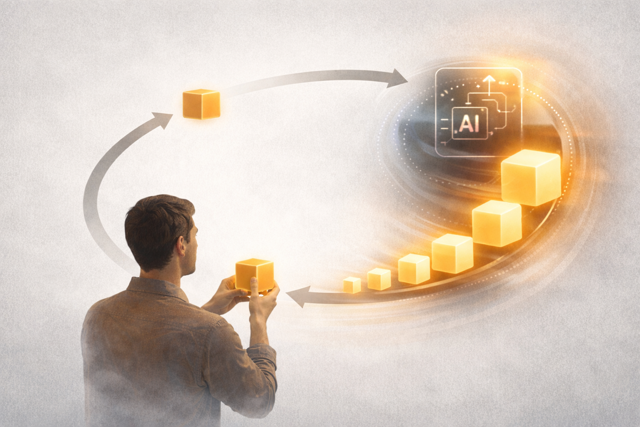
This creates an echo chamber where developers stay trapped in their own perspective, with AI amplifying rather than challenging their approach.
Next in this series: how AI impacts learning, knowledge transfer, and the balance between speed and depth.
