AI's Impact on Team Dynamics (Part 3) Collaboration & Healthy AI Use
In the previous part, I discussed how AI impacts learning and team effectiveness, highlighting the tension between speed and deeper understanding. While AI offers clear advantages, it also introduces new risks for long-term team health.
In this final part, I focus on how teams can consciously integrate AI while preserving collaboration, psychological safety, and strong team dynamics.
Maintaining psychological safety in the AI era
Psychological safety, the foundation of effective team dynamics, faces new challenges in the AI era.
When developers can generate solutions privately with AI, they’re less likely to expose their thinking process to the team. They’re less likely to admit when they’re stuck or uncertain. This personal vulnerability that builds trust gets replaced by a facade of AI-assisted competence.
I expect this effect to be particularly visible with medior developers. Junior developers are expected to ask questions, so they face less stigma in seeking help. Senior developers have already built their network and credibility. But medior developers occupy an awkward middle ground, they feel pressure to appear knowledgeable, and AI gives them a way to maintain that appearance without asking for help. This prevents them from building the deeper relationships that would actually support their growth.
Teams need to actively cultivate an environment where it’s safe to say, "I used AI to create this, but I’m not sure it’s the right approach. Can we review it together?" This requires leadership that models this behavior and explicitly values learning over appearing knowledgeable.
Collaboration
Collaboration is a skill. Like any skill, it requires practice. When developers spend more time interacting with AI and less time interacting with humans, their collaboration skills decline.
They become less adept at explaining their thinking. Less patient with the unstructured way we as humans use for communication. Less skilled at navigating disagreements and finding compromise.
The consequences ripple through every aspect of teamwork. Code reviews that used to spark rich discussions now get perfunctory approvals. Developers assume that if the code works and AI helped generate it, it must be fine. The critical thinking that makes code reviews valuable gets bypassed.
Pair programming becomes less common. Why pair when you can just ask AI or pair program with your personal AI assistant? But pairing isn’t just about solving problems faster. It’s about building shared understanding, transferring knowledge, and strengthening team bonds.
The result is teams that function more like collections of individuals working in parallel. Feedback loops between humans diminish instead of strengthening over time as they do in true collaborative teams.
Strategies for healthy AI integration
So how do we get the benefits of AI without losing the human dynamics that make teams effective? Here are some of my thoughts:
Establish AI usage criteria as a team. Don’t let AI adoption happen organically. Discuss as a team how you want to use these tools. When is AI appropriate? When should you seek human input instead? Make these criteria explicit, and ensure they also account for relevant legislation and moral considerations. Ethical and legal boundaries should guide your decisions just as much as technical convenience.
Use AI as a conversation starter, not a conversation ender. When AI generates a solution, treat it as a draft to discuss, not a final answer. Ask, "What do we think about this approach? What are we missing?"
Protect collaboration time. Schedule regular pairing sessions, architecture discussions, and knowledge-sharing meetings. Make these non-negotiable, even when AI could theoretically replace them.
Rotate AI-free days. Some teams experiment with days where AI tools are off-limits. This forces developers to rely on each other and keeps collaboration skills sharp.
Make learning visible. Encourage developers to share what they learned from AI interactions. "I asked AI about this pattern, and here’s what I discovered." This transforms individual AI usage into collective learning.
Measure what matters. Don’t just track velocity. Track code quality, knowledge distribution across the team, and team satisfaction. If AI is improving velocity but harming these other metrics, adjust your approach.
The future of team dynamics
AI isn’t going away. If anything, these tools will become more capable and more integrated into our workflows. The teams that thrive will be those that consciously shape how AI fits into their dynamics.
To achieve this requires treating AI integration as a team dynamics challenge, not just a technical one. It requires ongoing conversation about what we’re gaining and what we’re losing. It requires leadership that values human connection as much as productivity.
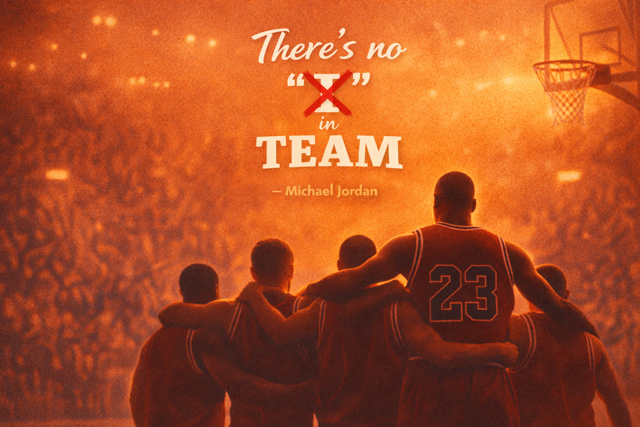
Michael Jordan couldn’t win championships alone, no matter how talented he was. The same is true for software teams. AI can make individual developers more productive, but it can’t replace the collective intelligence, creativity, and resilience that emerges from strong team dynamics.
Conclusion
AI’s impact on team dynamics is neither purely positive nor purely negative. It’s a powerful tool that amplifies our choices. If we choose isolation and speed over collaboration and depth, AI will accelerate that path. If we choose to use AI as a catalyst for better collaboration, it can enhance our team dynamics.
The key is intentionality. We need to actively design how AI fits into our teams, rather than passively accepting whatever dynamics emerge. We need to protect the human interactions that make teams effective, even as we embrace the productivity gains AI offers.
Because at the end of the day, software engineering is still a human journey. The code we write serves human needs. The systems we build are maintained by human teams. And the success of our projects depends on human collaboration.
AI can be a powerful ally in this work. But only if we ensure it enhances, rather than replaces, the team dynamics that make us effective.
So as we integrate AI into our workflow, let’s ask ourselves: Is this making me more connected to my team, or more isolated? Is this deepening our collective understanding, or creating individual silos? Is this enhancing our collaboration, or replacing it?
The answers to these questions will determine whether AI strengthens or weakens your team dynamics. Choose wisely.
